
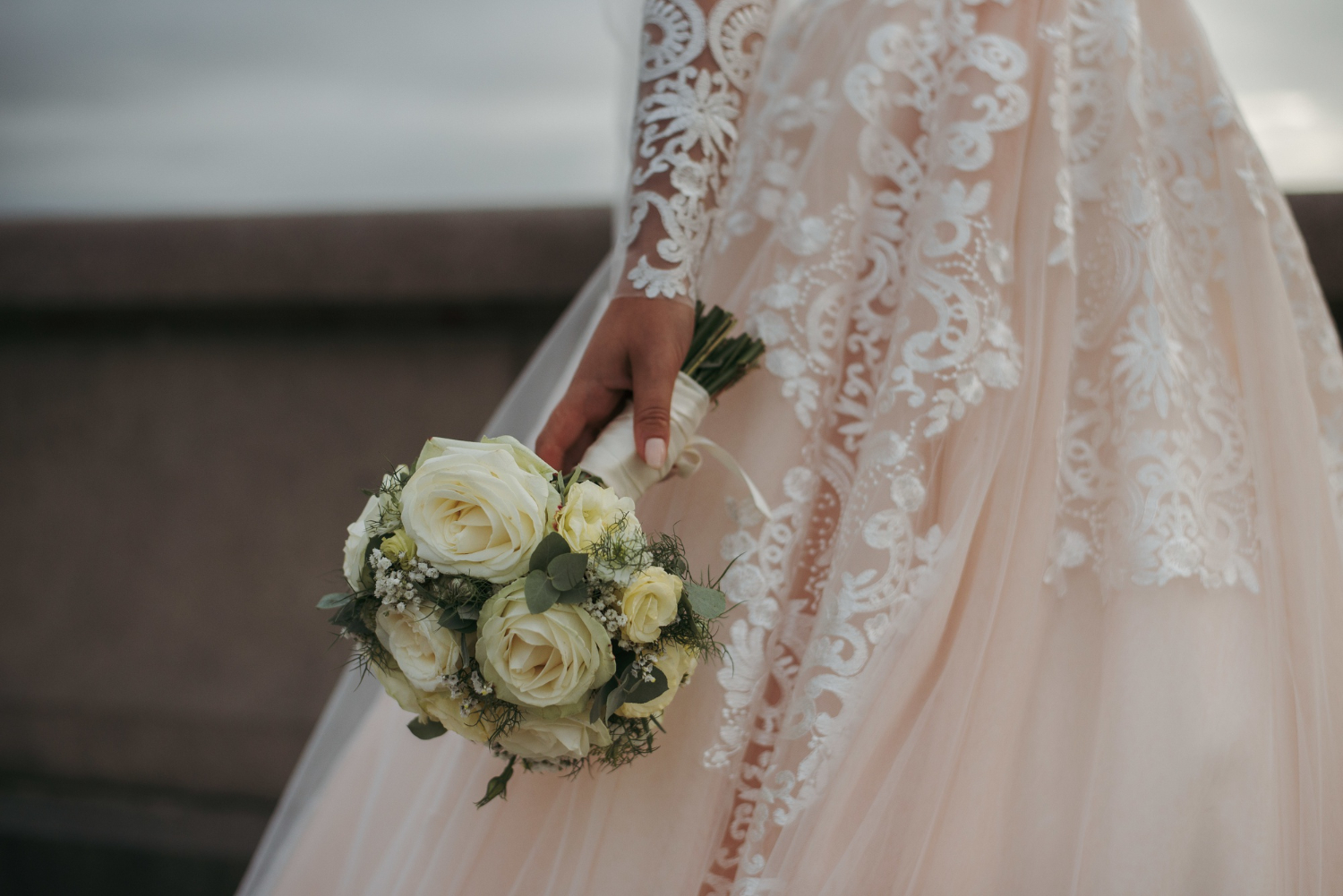
You chose your dream wedding dress, celebrated in it, and carefully packed it away to preserve the memory. It’s comforting to know it’s still there, reminding you of one of the happiest days of your lifetime. Naturally, you assumed storing it properly was enough to protect it, because that’s the common practice. At the time, it likely felt like the final responsible step.
Then comes the surprise when a dress that once looked bright begins to discolor. But know that yellowing doesn’t happen randomly, and it rarely appears overnight. Instead, it’s usually connected to what the dress experienced and how it was handled shortly after the wedding.
In this post, let us walk you through what to do in those first 30 days, so you can give yours a better chance at staying bright and intact.
Days 1–3: Let the Dress Breathe Before Storing
The first few days after your wedding are more important than you might think. Your dress holds on to moisture from sweat, humidity, and even small spills, and that moisture needs time to fully evaporate.
If you seal the dress too quickly, you trap dampness inside, which can lead to oxidation and fabric stress, two major reasons why wedding dresses turn yellow. When silk, satin, or tulle stays enclosed while damp, the fibers can weaken and begin to discolor.
Let the dress air dry in a clean, temperature-controlled room before moving on to storage or preservation.
How to Air-Dry Your Wedding Dress Safely
Follow these practical guidelines to protect the fabric during the first 72 hours:
- Choose a cool, dry room with steady airflow.
- Use a padded hanger to support the shoulders without stretching them.
- Keep the dress away from windows to prevent UV exposure.
- Skip plastic coverings entirely; use a cotton sheet if light dust protection is needed.
- Avoid crowded closets with limited airflow.
Do not place your dress into a sealed bag, even for a brief period. Plastic restricts airflow and can trigger chemical reactions that increase the risk of yellowing. If the hem or bodice still feels damp after a long reception, give it additional time to dry completely.
Allowing the dress to breathe during these first few days lays the groundwork for proper wedding dress preservation and helps prevent long-term discoloration.
Week 1: Inspect for Hidden Stains
By the end of the first week, your dress may look perfectly clean, but small amounts of residue can remain in the fabric. Oils, sugars, and makeup settle into the fibers and slowly react with air. That reaction is one of the main reasons wedding dresses yellow unevenly.
Even faint, barely visible spots can darken over time if left untreated. The underarms, bodice lining, hemline, and train are typically the areas that collect the most buildup.
Before moving ahead with bridal dress preservation, examine these areas carefully and address any issues immediately.
Where and How to Check for Problem Areas
Set up a thorough inspection using bright, neutral lighting:
- Underarms: Look for faint rings or stiff areas.
- Hemline: Examine for soil, grass, or dust buildup.
- Bodice interior: Check for foundation transfer and perspiration marks.
- Train: Inspect for dirt and beverage drips.
- Neckline and straps: Look for makeup or self-tanner residue.
Lay the dress flat on a clean white sheet and inspect it in natural daylight or under a bright LED light. Gently feel any areas that seem questionable, since stiffness can signal residue even without visible stains.
Take photos and brief notes to share with a preservation specialist. A careful check now helps prevent hidden spots from becoming permanent damage and supports proper preservation of the wedding dress.
Weeks 2–3: Schedule Professional Cleaning
Timing matters more than you might think. The longer you wait to clean your dress, the more oxidation can develop, especially in areas exposed to perspiration or sugary spills. As residue sits in the fabric, it bonds with the fibers.
This is one reason wedding dresses yellow even when they first appear clean. Champagne, cake, and soda may dry without leaving a visible mark, but those sugars gradually darken over time.
For that reason, scheduling professional bridal dress cleaning and preservation within 2 to 3 weeks significantly reduces the risk of permanent staining.
What to Communicate to Your Cleaner
When you schedule professional cleaning, provide specific details, including:
- Describe any spills or incidents, even if no stain is visible.
- Mention outdoor photos or weather exposure, such as rain or grass.
- Identify delicate embellishments, such as beading or lace appliqués.
- Share fabric composition information if available.
Choose a specialist who focuses on wedding dress preservation rather than a general dry cleaner. Preservation experts use fabric-safe techniques and treat delicate details with care. They address sugar-based stains before oxidation accelerates. Cleaning your dress within Weeks 2–3 is one of the most effective ways to prevent yellowing and protect its structure.
Before Day 30: Decide Between Storage and Preservation
Before the first month ends, decide what you want to do with your dress. Whether you choose short-term storage or full wedding dress preservation will affect how well it holds up over time. If you put off the decision, the dress may sit in temporary packaging that doesn’t adequately protect it. That can lead to discoloration as weeks pass.
Once you’re clear on whether you plan to resell, preserve, repurpose, or donate it, you can take the right next step with confidence.
How to Choose the Right Path for Your Dress
Consider the following scenarios:
- Immediate resale: Clean professionally, then store in breathable garment protection rather than sealed archival packaging.
- Heirloom preservation: Invest in museum-quality bridal dress preservation with acid-free tissue and archival boxing.
- Repurposing projects: Complete professional cleaning before altering or redesigning fabric.
- Donation timeline: Confirm the organization’s cleaning requirements and deliver the dress promptly.
Archival preservation relies on acid-free materials and sealed containers that limit oxygen exposure and help prevent creasing. Unlike standard storage, it slows the chemical reactions that lead to yellowing.
By Day 30, a clear plan protects your investment. Whether you choose resale or heirloom preservation, acting decisively helps prevent unnecessary damage.
Keep Your Wedding Dress Bright and Beautiful with Bridal Care at Jan’s Professional Dry Cleaners!
Wedding dresses are timeless heirlooms, but age, improper storage, and hidden stains can lead to yellowing and fabric damage over time. Restoring and protecting your dress starts with professional care from specialists who understand delicate bridal fabrics and vintage details.
At Jan’s Professional Dry Cleaners, our certified wedding dress specialists treat every dress individually, never alongside others, to ensure the most attentive and personalized care possible. With extensive training, experience, and a passion for preservation, we can restore dresses of any age, fabric, or style, including intricate lace, beading, and silk.
We’ve proudly helped countless brides bring cherished family heirlooms back to their original elegance, ready to shine once again. Contact Jan’s Professional Dry Cleaners today to schedule your wedding dress restoration and preservation consultation, or call (810) 750-8000 to speak directly with one of our specialists.