
You don’t need to lose weight or buy new clothes to look taller and leaner. Instead, focus on how your clothes guide the eye. Clean vertical lines create length, while bunched hems, boxy waists, and overly long jackets interrupt your silhouette and make it appear wider.
Start with the fit issue bothering you most, then choose an alteration that creates a smoother, longer silhouette.
1) Hem Pants to Hit Just at the Shoe, With No Break or a Slight Break
Your pant hem controls where the eye stops. Fabric stacked above the shoe interrupts the vertical line; a clean hem extends it from your waist to your shoe.
Choose from three finishes:
- Full break: noticeable fabric folds create a relaxed look but add volume at the ankle.
- Slight break: one soft crease touches the shoe for a polished line with some movement.
- No break: the hem meets the shoe without folding, which can create a particularly clean, uninterrupted leg line.
If you want a taller, leaner effect, you may prefer no break or a slight break, depending on the pants, shoes, and overall look you want. Ask your tailor to keep the front clean and prevent the back hem from catching beneath your shoe.
Take your shoes to the fitting:
- Flats and sneakers need a shorter hem.
- Heels require more length to preserve the line.
- If you rotate between heel heights, take both pairs and choose a midpoint.
The payoff: A longer, cleaner leg line in pants you already own, without changing the outfit or buying anything new.
2) Taper Pant Legs Through the Calf for One Continuous Vertical Line
Extra fabric below the knee can widen your silhouette and interrupt the line from waist to shoe. A controlled taper streamlines that line without making the pants skin-tight.
Ask your tailor to:
- Start the taper around the knee.
- Gradually take in the inseam and outseam toward the ankle.
- Keep enough room through the calf for natural movement.
- Adjust the hem opening to work with your shoes.
The goal is one smooth line, not the narrowest possible leg. Too much taper can make pockets pull, knees twist, or fabric catch on your calves.
Check the fit:
- The fabric should fall cleanly without side-to-side folds.
- You should sit, walk, and climb stairs comfortably.
- The hem should meet the shoe without bunching or flaring.
Compare the original and pinned versions in a mirror. The tapered version should create a cleaner vertical path and more intentional silhouette.
The payoff: Pants that create longer-looking proportions while still feeling comfortable and suited to your personal style.
3) Define the Waist on Tops, Jackets, and Dresses
A boxy garment creates an uninterrupted block from shoulder to hem. Gentle definition at your natural waist breaks up that width and draws the eye inward, then upward.
This alteration works well on:
- Button-down shirts with extra fabric through the middle.
- Blazers that hang straight from the shoulders.
- Shift dresses that need subtle shaping.
Ask your tailor to pin the garment while you stand naturally. The seam should follow your proportions, not force a shape.
Check these fit signals:
- Side seams stay straight instead of pulling forward.
- Buttons lay flat without gaping.
- Fabric skims the waist and releases over the hips.
- You can sit, reach, and move without strain lines.
Avoid over-tapering. A tight fit creates horizontal pulling and interrupts the vertical line you want. Gentle shaping creates a polished result without sacrificing comfort.
The payoff: One alteration that gives boxy tops, jackets, and dresses a longer, more defined line without sacrificing how comfortably you actually wear them.
4) Adjust Jacket and Blazer Length for Better Proportion
Jacket length can change how your upper and lower body appear in relation to each other. Depending on the jacket’s construction, your height, and the clothing you pair with it, adjusting the hem may create a more balanced silhouette.
Use this fitting check:
- Ask your tailor to pin the length.
- Let your arms hang naturally; your fingertips offer a starting reference, not a rule.
- Wear the pants, skirt, and shoes you pair with the jacket.
- Check the proportion from the front, side, and back.
Shortening a blazer involves more than cutting fabric. Your tailor may need to adjust pockets, buttons and buttonholes, vents, lining, and topstitching.
Ask about feasibility and cost before approving the work. Pockets or vents that sit too close to the hem can throw off the jacket’s balance.
The payoff: A jacket length selected around your proportions, outfit, and personal style rather than one universal rule.
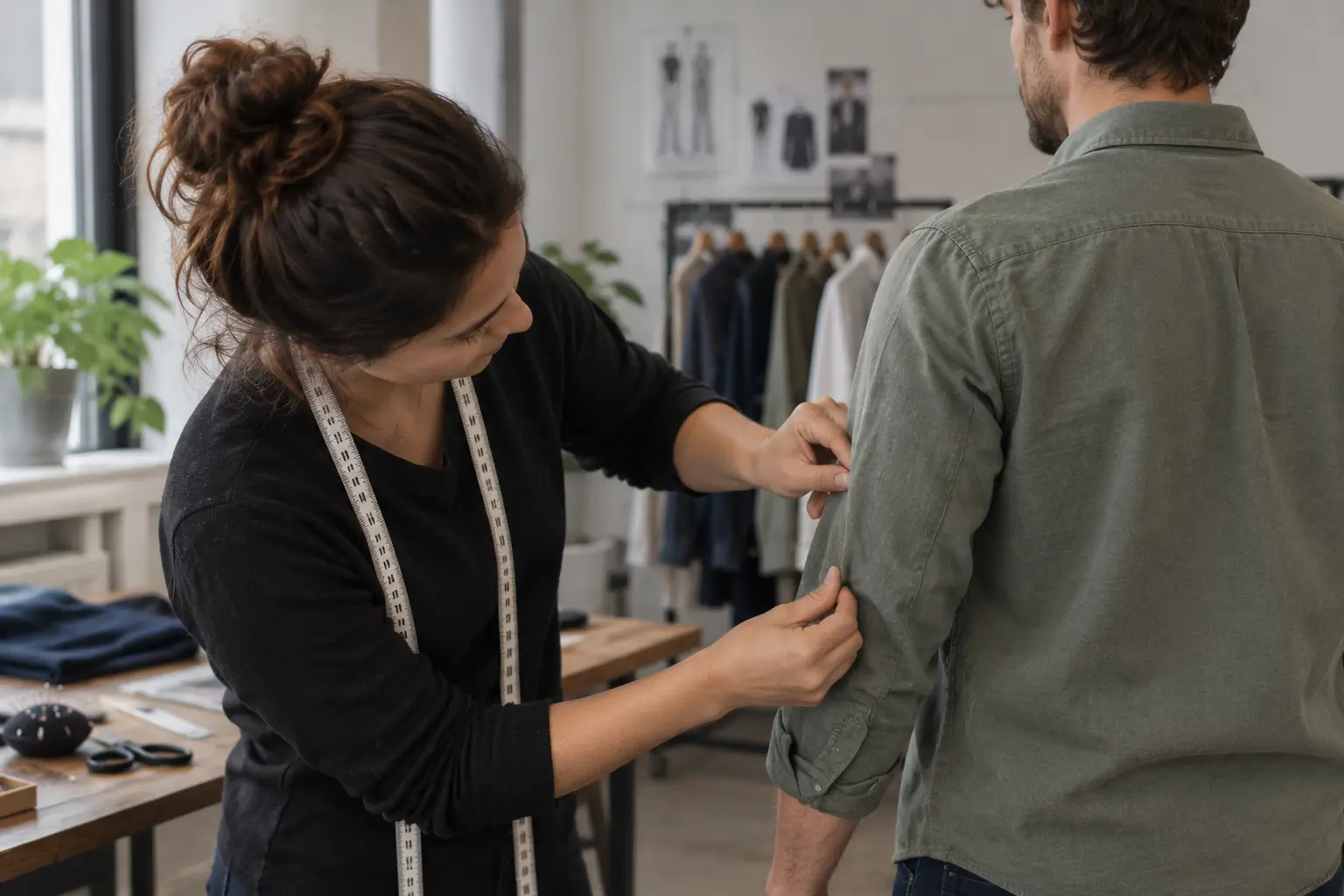
5) Shorten Sleeves to Show a Quarter-Inch of Wrist
Proper sleeve length depends on the garment, its construction, and how you plan to wear it. Your tailor can pin the sleeve at a length that creates a clean proportion while maintaining comfortable movement.
Use this fitting check:
- Ask your tailor to check if the jacket has functional cuff buttons.
- If the buttons actually function, shorten from the shoulder so the cuff and buttonholes stay intact.
- If the buttons are decorative only, shorten from the cuff, which costs less and takes less time.
- Bend your elbow and reach forward during the fitting, since sleeve length that looks right standing still can ride up or bunch in motion.
Some sleeves can be adjusted at the cuff, while others may require work at the shoulder to preserve buttons, buttonholes, trim, or other design details. Ask your tailor which method best protects the garment’s original construction and appearance before approving the alteration.
The payoff: Sleeves that complement the garment and your proportions while allowing you to move comfortably.
6) Raise Dress and Jumpsuit Waistlines to Sit at the Natural Waist
A dress or jumpsuit cut for a longer torso may place its waist seam closer to your hips. That lower break lengthens the bodice and visually shortens the leg line.
Raising the waist creates the opposite effect: the bodice looks shorter and more defined, and the leg line begins higher and appears longer.
This alteration works especially well on:
- Fit-and-flare dresses.
- Jumpsuits with a defined waist seam.
- Belted dresses and utility styles.
- Garments with extra bodice length.
Ask your tailor to pin the position while you stand, sit, and move. The seam should meet your natural waist without pulling through the shoulders, bust, seat, or rise.
The work may involve the zipper, darts, belt loops, pockets, or bodice. Discuss those details first; raising the seam too far can affect comfort and balance.
The payoff: One well-placed seam adjustment that creates a higher focal point and resets the proportions of the outfit.
7) Open Up Necklines With a Subtle V or Scoop Adjustment
A closed neckline creates a horizontal stopping point near your collarbone. A subtle V or scoop draws the eye downward, adding length through the neck and upper body.
This adjustment works best on:
- Simple knit tops.
- Collarless blouses.
- Garments without embellishment or layered construction.
Choose an experienced tailor. Recutting a neckline may require changes to the facing, binding, or interfacing.
Before approving the cut, ask your tailor to mark the shape while you wear the garment, balance the neckline depth with your shoulder width, confirm the edge will lay flat without stretching or gaping, and explain how the edge will be finished. Start subtle. Your tailor can lower the neckline further during the fitting but cannot replace fabric once removed.
The payoff: A longer-looking neckline and upper-body line from an adjustment most people never consider.
What to Take to Your First Fitting
Take the complete outfit so your tailor can pin accurately. Pack these five fitting essentials:
- The garment, freshly cleaned and pressed if possible.
- The exact shoes you plan to wear, especially for hemming.
- The undergarments or shapewear you will wear underneath.
- The belt or accessories that affect the garment’s position.
- A reference photo showing the fit or proportion you want.
Once the garment is pinned, test it in motion: sit down, walk a few steps, reach forward and overhead, and bend naturally at the waist and knees.
Watch for pulling, gaping, bunching, or riding up. A waist or hem can look perfect while you stand still but shift as soon as you move. Mention every restriction before your tailor makes the final alteration.
Create a Taller, Leaner Silhouette with Alterations at Jan’s Professional Dry Cleaners
A balanced silhouette comes from adjustments that work together, including hem placement, trouser taper, sleeve length, and jacket proportion. The in-house team at Jan’s Professional Dry Cleaners provides alteration and tailoring services at our retail stores in Clio and Frankenmuth, Michigan, and evaluates the entire garment before recommending changes, so you do not pay for work that will not improve the fit.
Call now to book a fitting and bring the shoes you plan to wear.
Clio Location
Address: 130 Griffes St., Clio, MI, 48420
Phone:+ 1810-689-1803
Store Hours
Monday to Friday: 7:00 a.m. to 7:00 p.m.
Saturday: 9:00 a.m. to 5:00 p.m.
Sunday: Closed
Frankenmuth Location
Address: 154 S. Main St., Unit 2, Frankenmuth, MI, 48734
Phone:+1 810-683-2604
Store Hours
Monday to Friday: 9:00 a.m. to 5:00 p.m.
Saturday: 9:00 a.m. to 1:00 p.m.
Sunday: Closed
Free Pickup and Delivery Service
Available throughout Clio, MI, and its surrounding areas