
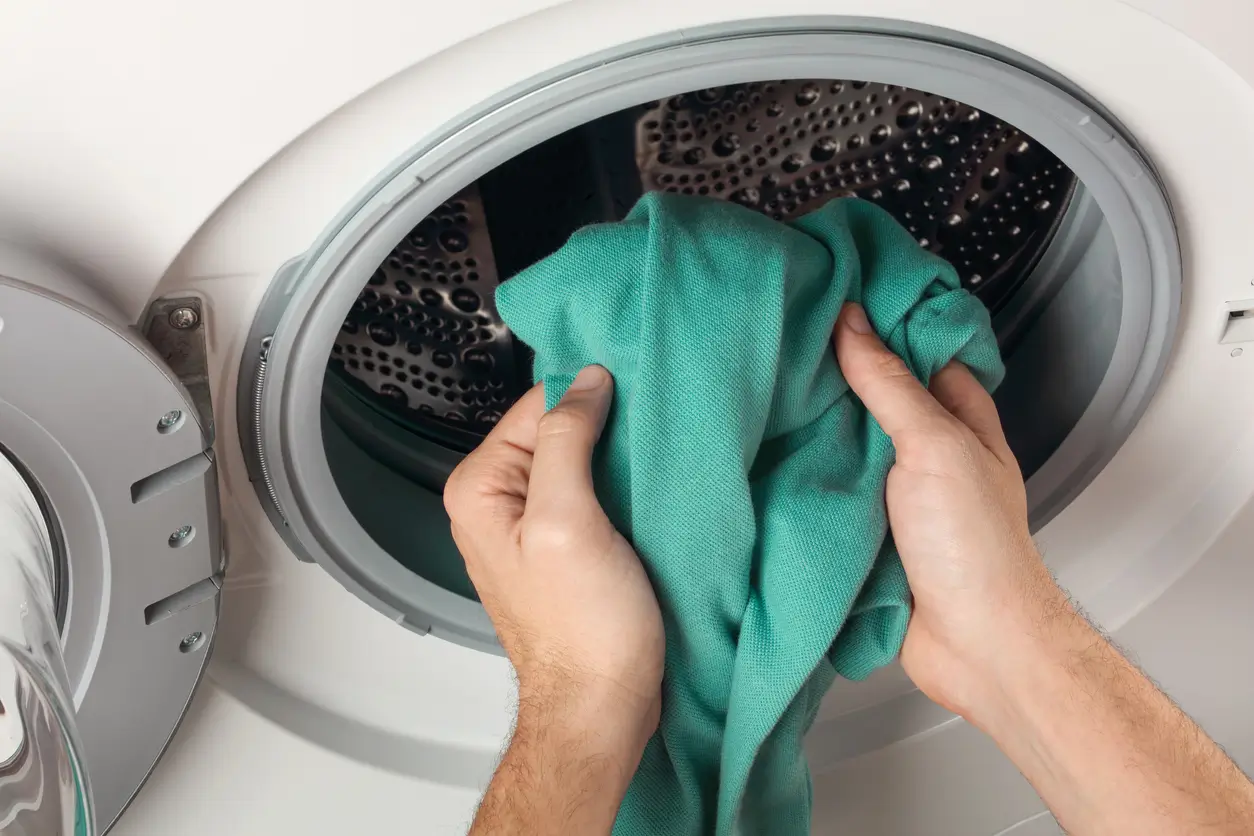
The sweater didn’t shrink from years of careful washing. It shrank in one cycle, probably the first hot one. Most fibers lose most of their available shrinkage potential the first time heat and water act together, which means the damage is often done before the garment has been worn more than a few times.
Understanding which habits trigger that one-cycle loss is the whole game, and most of them have nothing to do with which detergent you use. Here are the seven laundry mistakes that cause shrinkage, and the mechanism behind each.
Mistake #1: Ignoring the Care Label
The care label should guide every decision you make, from water temperature to drying method.
Before placing a garment in the washer, check for instructions such as:
- Machine wash
- Hand wash
- Cold or warm water
- Gentle or delicate cycle
- Tumble dry low
- Line dry
- Dry flat
- Do not tumble dry
- Dry clean
- Professionally dry clean
- Spot clean only
The Drycleaning & Laundry Institute explains that a care label must provide at least one safe cleaning method. It may not list every possible option, but you should never assume an unlisted method is safe.
For example, a “dry clean only” garment may contain dyes, trims, linings, adhesives, or interfacings that react poorly to water. Even if the main fabric survives washing, another part of the garment may shrink, bleed, pucker, or separate.
Better move: Read the entire care label before washing. If the instructions are missing or unclear, ask Jan’s Professional Dry Cleaners to evaluate the garment.
Mistake #2: Washing Garments That Need Professional Care
Some garments simply do not belong in a home washing machine.
Use extra caution with:
- Wool coats and tailored wool garments
- Cashmere and fine wool sweaters
- Silk dresses and blouses
- Rayon and crepe garments
- Structured or lined linen pieces
- Pleated garments
- Structured blazers
- Lined dresses
- Garments with beads, sequins, or delicate trims
Even when water does not ruin the fabric, a home washer can change the garment’s texture, drape, or construction. Silk may lose its smooth feel. Wool may become matted. Linen may develop deep wrinkles. Linings and outer fabrics may shrink at different rates.
Cleaning is only half the challenge. The bigger problem is usually returning the garment to its original shape and like-new appearance.
Professional cleaners can use dry cleaning or controlled professional wet cleaning, depending on the garment. Professional wet cleaning uses water, but it does not work like a regular home washer. A trained cleaner controls the water level, temperature, detergent, cycle time, and mechanical action.
After cleaning, the garment may also require:
- Professional pressing
- Steam-air finishing
- Blocking and reshaping
- Tensioning equipment
- Hand finishing
- Careful treatment of seams, collars, cuffs, and linings
Better move: Leave delicate, structured, and professionally finished garments out of your home washer unless the care label clearly allows home washing.
Mistake #3: Sorting Laundry Only by Color
Separating whites from dark colors is a good start, but color should not be your only sorting rule.
A heavy cotton sweatshirt, a lightweight polyester blouse, and a washable knit may share the same color. That does not mean they should share the same wash and dry cycle.
Different fabrics require different amounts of:
- Water
- Agitation
- Drying time
- Dryer heat
Heavy garments also take longer to dry. When you mix them with lightweight clothing, the lighter pieces may continue tumbling long after they have dried. That unnecessary exposure can cause shrinkage, permanent wrinkles, pilling, or heat distortion.
Try sorting your laundry into these groups:
Cold and Delicate
Washable knits, lingerie, lightweight fabrics, rayon approved for home washing, and garments containing spandex or elastane.
Everyday Clothing
Cotton T-shirts, durable casual clothing, and synthetic garments with similar care instructions.
Heavy Items
Towels, sweatshirts, jeans, sturdy bedding, and other thick fabrics that require more drying time.
Professional Care
Wool tailoring, cashmere, fine silk, delicate linen garments, lined clothing, and anything labeled “dry clean only.”
Better move: Sort by color, fiber, fabric weight, and care instructions. Apply the same sorting rules before using the dryer.
Mistake #4: Setting the Water Temperature Too High
Hotter water does not always produce a better wash. Heat can encourage certain natural fibers to contract. It can also cause dyes to fade or bleed and may damage elastic fibers.
That does not mean cold water works best for every load. The right temperature depends on the garment, soil level, and care instructions.
Use this simple guide:
- Cold water: Dark colors, delicate washable garments, shrink-prone pieces, and items labeled for cold washing
- Warm water: Durable, colorfast everyday clothing when the care label permits it
- Hot water: Sturdy white towels, bedding, and heavily soiled utility items when the label specifically allows it
Avoid sudden temperature changes when washing wool or other sensitive animal fibers. Moving a garment from warm wash water into a very cold rinse may shock the fibers and increase the risk of distortion.
Better move: Follow the care label and use the lowest temperature that can safely clean the load.
Mistake #5: Using Too Much Agitation
Heat is not the only cause of shrinkage. Mechanical action can create just as much trouble. During a regular machine cycle, garments rub, twist, spin, and move against one another. Durable fabrics can usually handle that movement. Wool, cashmere, angora, chenille, and loose knits may not.
Wool fibers have overlapping surface scales. Moisture and agitation can make these scales catch and lock together. The fabric then becomes denser, firmer, and smaller. This process is called felting.
Cold water cannot always prevent felting if the washer continues moving the garment aggressively.
If the care label allows machine washing:
- Select the wool or delicate cycle.
- Use the recommended water temperature.
- Choose a mild detergent suitable for the fiber.
- Place the garment in a mesh bag when appropriate.
- Remove it promptly when the cycle ends.
- Press out water without twisting or wringing.
- Lay knits flat and reshape them to dry.
Remember that even a machine’s delicate cycle creates more movement than hand washing. If the label calls for hand washing, do not replace it with a delicate machine cycle.
Better move: Match the level of agitation to the label. When the label says “dry clean only,” skip home washing completely.
Mistake #6: Overloading the Dryer or Mixing Drying Loads
An overloaded dryer cannot move air efficiently. Clothes take longer to dry, develop more wrinkles, and receive uneven heat. Mixing heavy and lightweight garments creates another problem. The lightweight pieces dry first but continue tumbling because the heavier items still feel damp.
The Drycleaning & Laundry Institute recommends sorting dryer loads by fiber content and weight. It also recommends choosing the drying temperature according to the fabric.
Pay particular attention to acrylic, polyester, elastane, and other heat-sensitive fibers. Too much heat may shrink, stretch, weaken, or permanently distort them.
Before starting the dryer:
- Separate heavy pieces from lightweight clothing.
- Remove anything labeled “do not tumble dry.”
- Check whether knits need to dry flat.
- Select the setting based on the most heat-sensitive item.
- Avoid filling the drum so tightly that clothes cannot tumble freely.
Better move: Give garments room to move and to dry similar fabrics together.
Mistake #7: Drying Shrink-prone Clothes Until They Are Bone Dry
This is one of the most common and costly laundry mistakes.
The final 10 to 15 percent of drying can make a noticeable difference. As the last moisture leaves the garment, the fabric becomes hotter. Continued heat and tumbling may encourage the fibers to contract further.
Do not wait until every item feels hot and completely dry.
Instead:
- Use low or medium heat.
- Check the load before the cycle ends.
- Remove shrink-prone pieces while they still feel slightly damp.
- Reshape them gently.
- Hang woven garments or lay knits flat.
- Let them air-dry the rest of the way.
You do not need to air-dry every garment from the beginning. Simply avoiding the final stretch of unnecessary heat can help protect the original fit.
Once the remaining clothes finish drying, remove them promptly. Hang or fold them to prevent deep wrinkles and help any remaining moisture escape.
Better move: Use the dryer to remove most of the moisture, not all of it.
Does “Pre-Shrunk” Mean a Garment Cannot Shrink?
No. Pre-shrunk means the manufacturer treated the fabric to reduce shrinkage. It does not guarantee that the garment will remain the same size.
DLI notes that manufacturers commonly allow approximately 2–3% shrinkage in shirts. If the fabric was not properly stabilized before construction, a shirt may become:
- Tighter through the neck
- Shorter in the sleeves
- Smaller through the chest or body
This distinction matters because laundry habits do not cause every case of shrinkage. Sometimes normal cleaning reveals a manufacturing or construction problem already present in the garment.
If you follow the care label and the garment shrinks substantially, contact the retailer or manufacturer. A professional cleaner may also help you determine whether the problem came from heat, felting, fabric instability, or poor construction.
Can You Reverse Clothes That Already Shrunk?
Sometimes you can improve the fit, but complete restoration is never guaranteed.
Mild Relaxation Shrinkage
Some cotton garments and washable knits respond to gentle reshaping while damp.
- Wet the garment according to its care instructions.
- Press out excess water without twisting.
- Place it on a clean, flat surface.
- Gently return it to its original measurements.
- Leave it flat until completely dry.
Avoid pulling aggressively. You may stretch the neckline, sleeves, or side seams unevenly.
Felted Wool
Severe felting is usually permanent. Once the wool fibers lock together, a home treatment cannot reliably separate them.
A professional cleaner may improve a mildly affected sweater by blocking and reshaping it, but no method can guarantee full restoration.
Heat-Damaged Synthetic Fabrics
High dryer temperatures can permanently distort acrylic, polyester, nylon, elastane, and similar fibers. If a garment looks puckered, stretched, hardened, or misshapen after overheating, washing it again probably will not restore it.
When to Ask Jan’s Professional Dry Cleaners
Bring the garment to Jan’s Professional Dry Cleaners before trying aggressive soaking, stretching, or steaming. Our garment care professionals can examine the fiber, fabric construction, seams, lining, and type of shrinkage. We can then tell you whether professional blocking or reshaping may help, or whether the damage is permanent.
A Quick Prevention Recap Before You Run Your Next Load
Before your next laundry day, remember these simple rules:
Do’s:
- Read the care label before washing.
- Separate professionally cleaned garments from machine-washable clothing.
- Sort laundry by fiber and fabric weight, not just by color.
- Use the correct water temperature for each fabric.
- Reduce agitation for delicate garments that are safe to machine wash.
- Dry similar fabrics together.
- Remove garments from the dryer while they’re still slightly damp to minimize wrinkles.
- Lay wet knitwear flat to dry instead of hanging it.
- Trust professionals with delicate fabrics and structured garments, such as tailored suits.
Don’ts:
- Don’t overload the washer or dryer.
- Don’t use high heat on shrink-prone fabrics.
Save Your Delicate Pieces With Jan’s Professional Dry Cleaners
Some garments deserve better odds than a home machine can offer. Jan’s Professional Dry Cleaners handles the wool, cashmere, silk, and structured pieces on which Flint-area closets depend, using techniques built for fabrics that can’t risk a regular wash cycle.
Whether it’s a blazer you wear every week or a cashmere sweater you only bring out in winter, professional dry cleaning in Flint, Michigan protects the shape, size, and fabric integrity a washing machine can’t guarantee.
Visit the location that’s most convenient for you or ask about our FREE Pickup and Delivery Service.
Clio
📍 130 Griffes St., Ste. B, Clio, MI, 48420, United States
📞 + 1810-689-1803
Frankenmuth
📍 154 S Main St. #3, Frankenmuth, MI 48734
📞 +1 810-683-2604
🚚 FREE Pickup and Delivery Service throughout more than 15 counties