
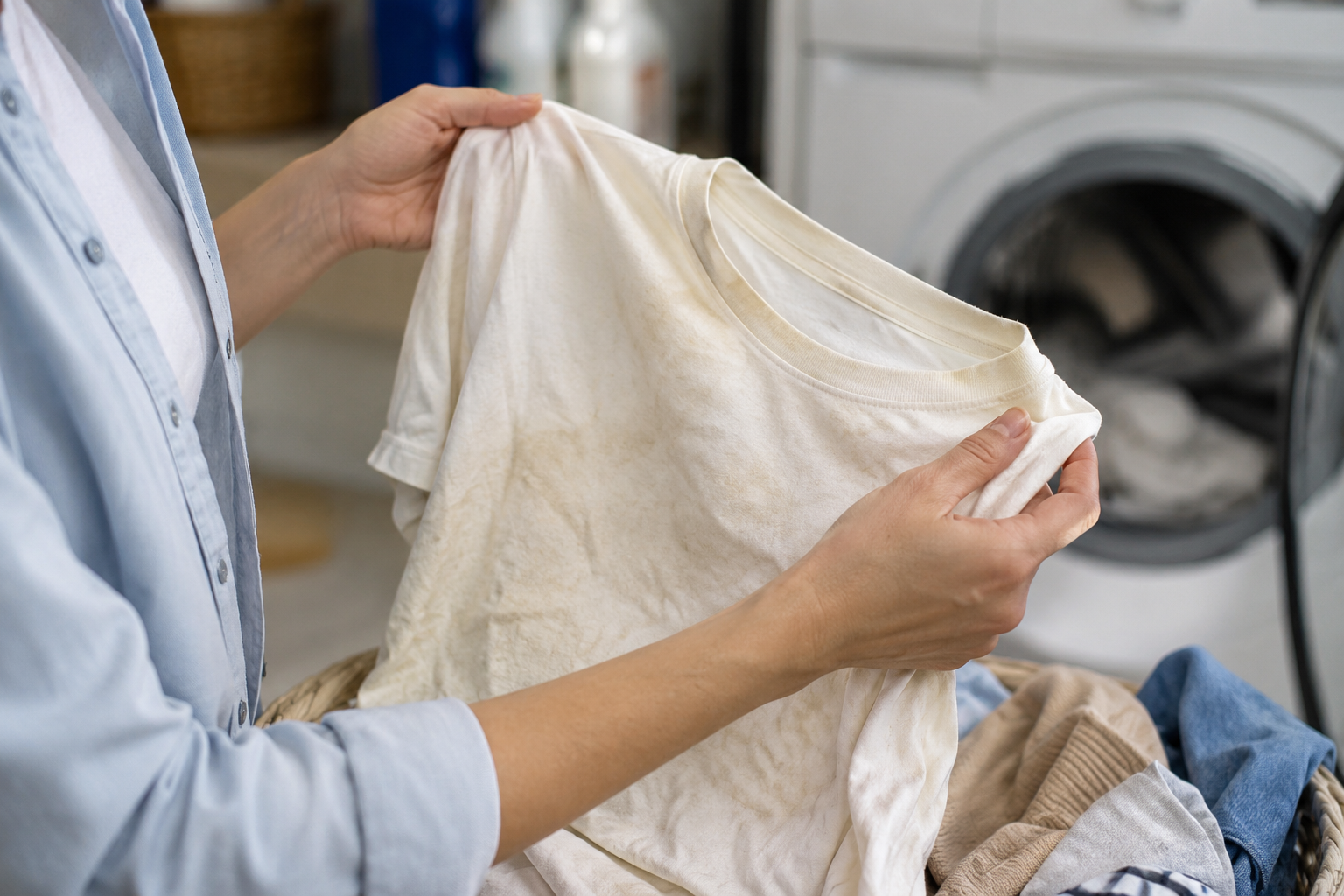
If you’ve ever done laundry somewhere with soft water – stayed with family in another state, or spent time somewhere with a different water supply – you probably noticed the difference without knowing why. Towels that felt genuinely soft. Whites that came out actually white. Colors that held. That difference wasn’t the machine or the detergent. It was the water.
In Flint and Genesee County, hard water is the baseline most people have never thought to question, and your clothes have been quietly paying for it ever since.
01: Towels That Feel Stiff and Scratchy No Matter What You Do
This is the number one thing people notice first, and spend months blaming on the wrong cause. If you’re wondering why your clothes feel stiff after washing, hard water is almost always the answer.
Here’s why it keeps happening no matter what you try:
- Hard water carries dissolved calcium and magnesium.
- When your laundry dries, those minerals stay behind on the fibers.
- Each wash cycle adds another layer.
- Eventually, the buildup makes fibers stiff, rough, and sandpaper-like.
Fabric softener temporarily masks the texture. Vinegar rinses give partial relief. But neither removes the minerals already bonded to the fabric, so the stiffness is back within a few washes.
02: Whites That Look Gray or Dingy Instead of Bright
White clothes should come out of the wash looking bright. If yours consistently looks grayish or yellowish, bleach is not going to fix it. Here’s why:
- Bleach targets organic stains and bacteria.
- Mineral film is neither; it’s a physical coating on the fiber surface.
- That coating reduces the fabric’s ability to reflect light, which is what makes whites look bright in the first place.
If you’ve given up on whites and assumed they’re just worn out, check this before you throw them away. The fabric may be perfectly fine. It’s just coated.
03: Dark Clothes That Fade Faster Than They Should
Black jeans turn gray after three or four months. Dark shirts look washed out by summer’s end. This isn’t normal wear; hard water accelerates it.
Two things are happening at the same time:
- Mineral particles act abrasively against dark-dyed fibers, physically scrubbing dye out of the fabric over repeated cycles.
- Those same minerals chemically interact with dye molecules during the wash, breaking down color faster than water alone ever would.
Washing in cold water and turning clothes inside out slows this down. But in a hard water home, you still redeposit minerals with every cycle. The fading keeps happening, just a little slower.
04: Detergent That Doesn’t Lather or Leaves a Filmy Residue
This one is easy to miss because you’re focused on the clothes, not the cleaning process. But pay attention next time you run a load:
- No lather: Hard water ions react with detergent surfactants before those surfactants can reach the fabric. You’re using a detergent that’s being neutralized before it can clean.
- More soap, same results: You increase the dose trying to compensate, but it doesn’t help much. You’re still fighting the water.
- Filmy or waxy feel: The incomplete chemical reaction leaves a residue on fabric, a faint, slippery coating that’s different from mineral stiffness but just as frustrating.
If doubling your detergent hasn’t improved your laundry results, stop adjusting the detergent. The water is the problem.
05: Persistent Musty Smell That Survives Every Wash Cycle
You pull a shirt out of the closet that was clean when you put it away. Now it smells like it sat in a damp basement. Or your towels smell musty within a day of folding them. You search for how to make clothes smell fresh again, and nothing works long term.
Here’s the cycle you’re stuck in:
- Mineral deposits create rough, porous patches in the fiber surface.
- Bacteria settle into those patches during the wash or dry cycle.
- The bacteria produce the musty odor.
- You wash the clothes, but the mineral deposits are still there, ready to trap the next round of bacteria.
Hot water kills bacteria but doesn’t dissolve the minerals hosting them. Vinegar neutralizes some buildup but not all. You treat the symptom every time while the root cause stays in the fabric.
The only real fix is removing the mineral buildup itself, something commercial water softening equipment handles at a level home washers can’t match.
06: White Mineral Deposits Visible on Dark Fabric After Drying
This is the most obvious sign, and if you see it, hard water is confirmed. Pull your dark clothes out of the dryer and look closely at the seams, creases, and hems. If you see white or chalky streaks or patches, you’re looking at dried mineral deposits. It is the same calcium and magnesium that were dissolved in your wash water, left behind on the surface after the water evaporated.
This happens because:
- The rinse cycle uses the same hard water, so it can’t fully flush out the minerals.
- Water collects in seams and creases during the rinse, concentrating the mineral content.
- When the dryer evaporates that water, the residue stays behind in visible white patches.
At this stage, you’re past the point where home remedies restore the fabric. The mineral layer has bonded to the fibers. This is where a professional laundry service that treats the water before it touches fabric makes a difference you can actually see, right here in Flint, Michigan.
Quick Reference: Six Hard Water Damage Signs
| # | What You Notice | What Hard Water Is Actually Doing |
|---|---|---|
| 1 | Stiff, scratchy towels | Minerals coat fibers and make them rigid |
| 2 | Gray or yellowish whites | Mineral film blocks light reflectivity |
| 3 | Dark clothes fading fast | Mineral particles erode dye from fibers |
| 4 | Detergent won’t lather | Minerals neutralize surfactants before they clean |
| 5 | Musty smell that keeps returning | Deposits trap bacteria deep in the fabric |
| 6 | White chalky streaks on dark clothes | Dissolved minerals left behind when water dries |
Minerals coat fibers and make them rigid
Mineral film blocks light reflectivity
Mineral particles erode dye from fibers
Minerals neutralize surfactants before they clean
Deposits trap bacteria deep in the fabric
Dissolved minerals left behind when water dries
Trust Jan’s Professional Dry Cleaners to Help Protect Your Clothes from Hard Water Buildup
When hard water minerals remain trapped in fabric fibers, clothes and home essentials can lose their brightness, softness, and overall comfort much faster than expected. Professional fabric care can help prevent that damage from becoming permanent.
At Jan’s Professional Dry Cleaners, we use advanced eco-friendly cleaning processes and professional fabric care techniques designed to help remove stubborn buildup, restore freshness, and protect your items from premature fading, stiffness, and wear.
Protect the comfort, softness, and appearance of your everyday garments and home essentials with expert laundry care from Jan’s Professional Dry Cleaners. Book your FREE Pickup and Delivery Service today and enjoy dependable service throughout Mid-Michigan.
Contact Jan’s Professional Dry Cleaners today, or schedule your professional laundry and dry cleaning services online.
Quick Contact Guide
Jan’s Professional Dry Cleaners — Clio
📍 130 Griffes St., Clio, MI, 48420
📞 Phone: +1 810-689-1803
Jan’s Professional Dry Cleaners — Frankenmuth
📍 154 S. Main St., #3, Frankenmuth, MI, 48734
📞 Phone: +1 810-683-2604